
Divine Playfulness
Reexamining the meaning of “I AM”

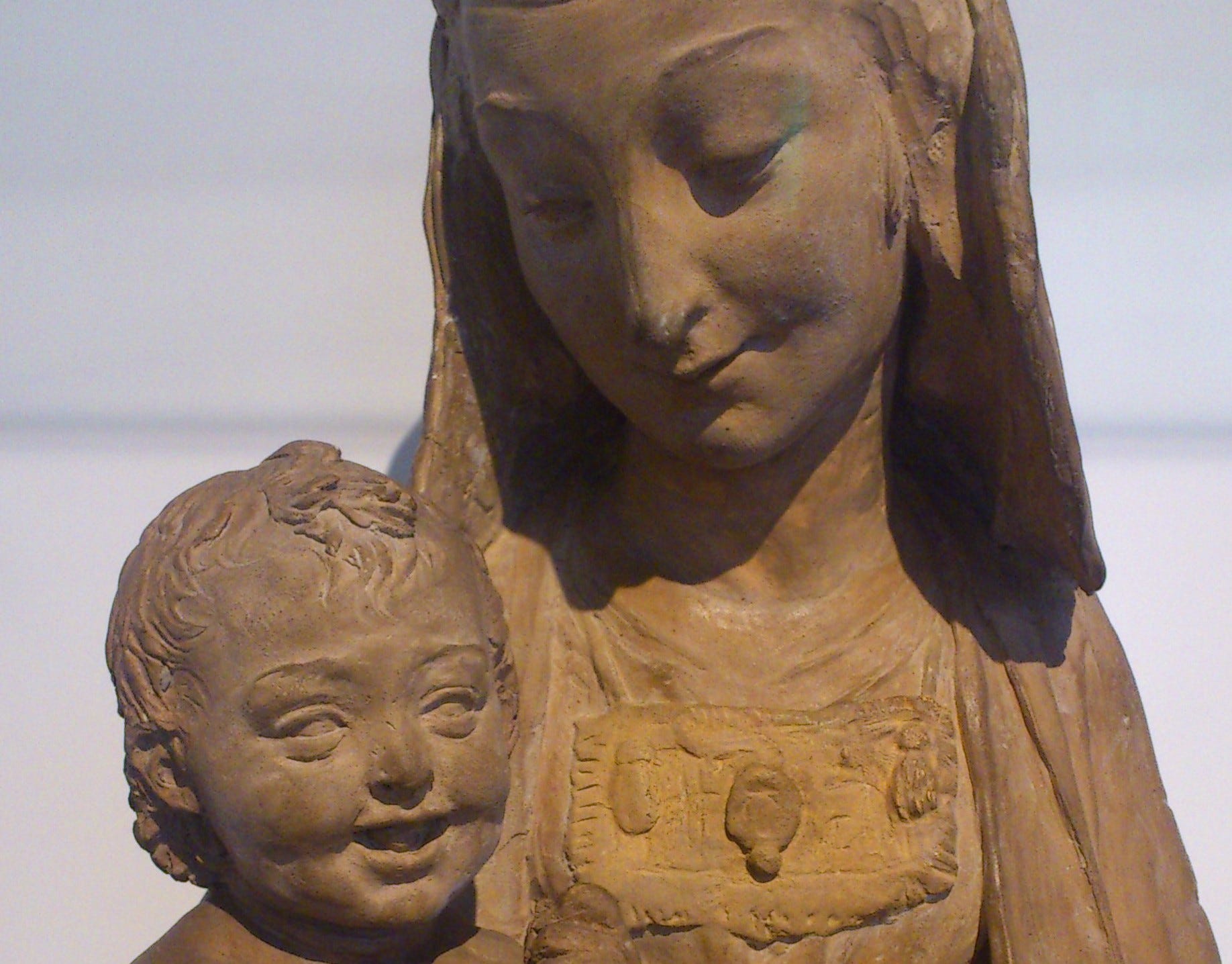
It is important not to take everything so seriously. This is certainly true in politics these days. It is the only way we can keep sane in these crazy times. It is also true in spirituality. This is another insight I got from reading Joel Hoffman’s 2016 book The Bible Doesn’t Say That: 40 Biblical Mistranslations, Misconceptions, and other Misunderstandings.
In my last post I wrote about how this book pointed me to the meaning of the ancient Hebrew name for God, YHWH, as I tried to pronounce the unpronounceable Divine Name. Hoffman goes on to explore the famous scene where Moses and God engage in a conversation on the slope of Mount Horeb.
In that scene Moses and God have the ancient equivalent of an online chat using a Bush, which was the ancient precursor of Apple. God tells Moses that he has been chosen to free the Hebrews from bondage in Egypt. Moses replies that if he is going to accept that mission, he would need to know God’s name, just in case people asked.
God cryptically answers, “ehyeh asher ehyeh,” which is translated “I am what I am” or “I am who I am” or “I will be who (or what) I will be.” Hebrew allows for all these translations. This is God’s way of saying in effect, “It is what it is!” God goes on to say, “Thus you shall say to the Israelites, ‘I AM has sent me to you.’” This sounds like God is giving a shortened form of “I AM WHAT I AM,” as if “I AM” is God’s first name or nickname.
I have always interpreted “I AM” as a saying with profound significance, referring to the Divine not as a being, but as Being. Paul Tillich built a systematic theology on this premise, calling Ultimate Reality “Being Itself” and the “Ground of Being.” Nondual spirituality also has a lot to say about “I AM” as the doorway to liberation.
Joel Hoffman has a different take on this scene. He insists that God was joking around with Moses. God was engaging in a play on words. Taking this seriously has resulted in a misunderstanding. He writes: “unappreciated wordplay ended up distorting God’s name.” He explains:
“But what we seem to have here is a wordplay. The word for “I am” (ehyeh) bears some resemblance to the tetragrammaton. The first is spelled A-H-Y-H, the second Y-H-W-H. In both words, the second and fourth letters are a heh. Both words contain a yud (in different places). And the A (aleph in Hebrew) is, like the vav, sometimes used to represent a vowel. It’s an ideal wordplay. But it is not God’s name, and it is not God’s final answer.”
I am not sure if I buy into Hoffman’s reasoning completely, but I love the thought that God is kidding around with Moses! It sheds new light on the scene. It opens up the story to be viewed in a new way. That is what humor does. It is disruptive to old interpretations. It fosters creativity. It gets us out of our old rut of thinking, so that we see things we never saw before.
In this case Moses wants to know God’s name, and God gives him the runaround. God is playing word games with him. Moses is being so holy and serious, and God is telling Moses to chill out. No deep theology here, just the Divine Jester having some fun.
Hinduism calls it Lila or Leela, Divine playfulness. It is the realization that the universe is a spontaneous, joyful expression of the divine. It encourages us to approach life with lightheartedness, spontaneity, and creativity. No fear of hell or yearning for heaven. Just the lightness of Being here now.
In the Burning Bush story, God avoids answering Moses’ question about God’s name directly. That is because in Hebrew thought a name communicates one’s nature and essence. There is no good answer to the question of Divine Essence. God was communicating the divine nature the best way possible – with a smile and a wink.
There is no good answer to a bad question. There is no direct answer to a misdirected question. There is only the attempt to point beyond the duality of question/answer to direct apprehension. Direct seeing results in doing, stepping into the world beyond the holy ground of the sacred mountain … to discover that it is all holy ground.
Then God says to Moses, “Thus you shall say to the Israelites, ‘YHWH, the God of your ancestors, the God of Abraham, the God of Isaac, and the God of Jacob, has sent me to you’: This is my name forever, and this is my title for all generations.”
As the conversation winds down God sends Moses back to the Nameless Name YHWH, the unpronounceable name. I talked about that in my last post. The Name, which is not a name, is God’s name forever. Now let’s stop thinking so hard and put our sandals back on! Let’s unbow our heads and play!
Truly playful. If you remove the spaces, it also reads Ehyeh Asherah Yah. That's my favorite interpretation ;)
Yes playful, Life is essentially playful and delightful...unless you try to control it of course, because THAT is the original sin: trying to bring the Divine essence down to your fears and egotistic desires. 🙏🏼♥️