
The Nameless Name
Pronouncing the unpronounceable name of God

I am always reading both a novel and a spirituality book at the same time. Often I have a nonfiction book open as well. I recently finished reading a book in this third category entitled The Bible Doesn’t Say That: 40 Biblical Mistranslations, Misconceptions, and other Misunderstandings. The author is a Jewish scholar named Joel Hoffman, who has a Ph.D. in linguistics. He brings a unique understanding to the Biblical text.
Most of the misunderstandings mentioned in his book I have heard before, but some of them are new to me. The most interesting one is the name of God in the Hebrew Scriptures. I knew the two most common Hebrew words for God: Elohim and Yahweh. I thought I knew the origin and meaning of the tetragrammaton YHWH. I was mistaken. (It is wonderful to be wrong. It is the only way I learn!)
After a review of the origins of language in the Middle East, Hoffman explained that YHWH is not pronounced Yahweh, as I was taught in seminary. Instead, it is pronounced as all vowels – even though it looks like consonants in English.
The written language of Hebrew originally had no vowels. Those were added by the reader. Centuries later Masoretic scholars added vowels to the sacred page in the form of little dots and lines, so that future generations would know how to pronounce the words.
Yet before the Masoretes invented these vowel symbols, the text already had some vowels. Three Hebrew letters served double duty as both consonant and vowel. These letters were heh (H), yod (Y) and waw (W). Stay with me! I know you did not sign up for a Hebrew lesson, so I will get right to the good stuff.
The oldest name for God - YHWH - has no consonants, even though they look like consonants to us. All three letters in the name – Y, H, W - represent vowels. Later they were mistaken for their consonant counterparts. That is how we got mistranslations like Yahweh and Jehovah.
To make a long story short, the name of God, which is famously given in the story of Moses and the Burning Bush, is a string of vowels. It was never meant to be pronounced according to Hoffman. He writes, “It didn’t even have a pronunciation. How could it? It was just a symbolic collection of vowels.”
He suggests that YHWH was always meant to be a placeholder in the text, never meant to be spoken. That is the origin of the Jewish tradition of substituting the word Hashem “the Name” when it occurs in the text. Yet I wondered if there was more to it. Why not pronounce it? So I tried.
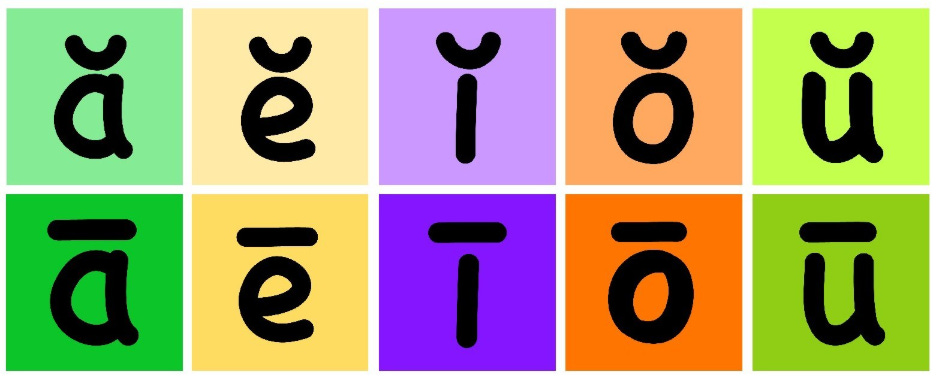
During meditation I chanted the Name of God. I started with the vowel associated with yod, which is an open-mouthed AAAA. Then I slowly went through the vowels for the other letters, letting one blend into the next. There are various possibilities for each letter, but it seemed natural to start with an open-mouthed vowel and progress slowly through the vowels to a nearly closed-mouth sound.
As the vowels come to an end and the mouth closes, it almost sounds like it ends in an M. When pronounced as all vowels, the Hebrew YHWH sounds very much like the sacred Sanskrit word AUM. It makes me wonder if these two ancient traditions had come to the same divine name by different routes.
I am not saying that this sound – or series of sounds - is a label for a personal deity, a secret password that gives you an edge in prayer. As I vocalized it, it felt more like the cry of a newborn infant. It is the howl of wild animals in the wilderness. It is a moan of grief from a bereaved parent. It is the ecstasy of a couple in love. It is the sound of awe and wonder. It is an expression of pain. It is Jesus crying out on the cross.
It is the sound of wind blowing through the trees. Jesus said to Nicodemus, “The wind blows where it pleases, and you hear its sound, but you don’t know where it comes from or where it is going. So it is with everyone born of the Spirit.” The Divine Name is the primal utterance of the first human species that began to speak. It is not a name, but it points to What has no name.
The opening words of the Tao Te Ching come to mind. “The Tao that can be spoken is not the eternal Tao. The name that can be named is not the eternal name. The nameless is the origin of Heaven and Earth.” The apostle Paul calls it the Spirit praying in us and through us with “groans too deep for words.”
Divinity is beyond human words. That is why God refused to give Jacob the Name during their wrestling match at the ford of the Jabbok. The closest we get to a divine name in the Bible are the words spoken from the Burning Bush to Moses. But even that scene is misunderstood, according to Hoffman. God has no name. But we can hear the unspeakable Name ... if we listen.
In the Gospel of Thomas, Jesus says something that the apostle Paul quotes in his first letter to Corinth. (Although no study Bible will admit that.) Jesus says, “I will give you what no eye has seen and what no ear has heard and what no hand has touched and what has not entered into the heart of man.” This gift is the nameless Name of God.
Thank you for this! I had to chuckle because my reading is similar - though the nonfiction book is often more history. Will have to check out the book you mentioned.
Related to your post - Was at a contemplative prayer session today. After we had a discussion about a reading that made me think of your post. I mentioned your thoughts about AUM. A woman there said it was similar to what Richard Rohr has said about YHWH. I found a clip on YouTube where he discusses the point - https://www.youtube.com/watch?v=SilgjFpdtwM
We hear a baby's first utterance as "mam mam mam" but in India, they hear it as "aum aum aum"! It is the sound that comes before the mind slowly appears, the name that can't be named. 🙏🏼♥️