
99.9% Extinct

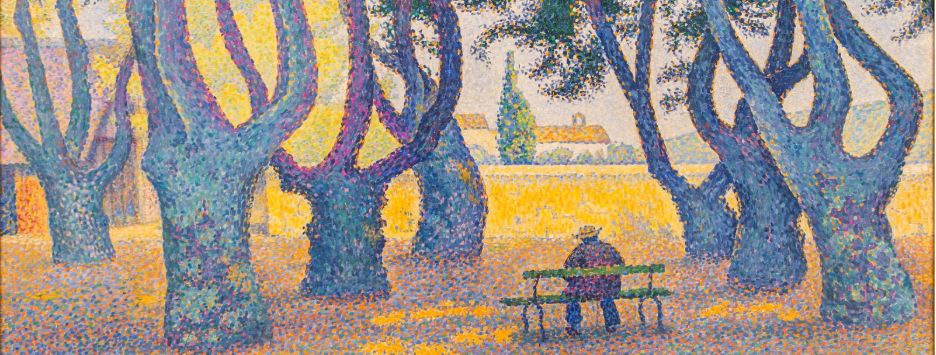
In recent days I have twice come across the statement that 99.9% of all species that have ever lived on this planet are extinct. The statement made me pause and think. That figure should cause anyone to think twice. It is like getting a death sentence from your doctor. Why do we think that our species is the exception to this statistic? How does this reality change our perception of the world?
To appreciate our place in the universe, we need to dig into what is called “deep time.” The term comes from geology. It refers to the immense scale of geological and cosmological time, spanning the earth’s 4.6-billion-year history and the universe’s 13.8 billion years. When viewed in this light, human history is insignificant. It puts all the current political shenanigans in perspective.
The average lifespan of a species is between 1 and 10 million years. Dinosaurs inhabited the earth for approximately 165 to 180 million years, from about 245–252 million years ago to their mass extinction 66 million years ago. Humans have existed for only 300,000 years. I doubt if we will see another 300,000. We seem to have a death wish, hastening our own demise by destroying the environment that keeps us alive. In the process we are taking down other species in what many scientists call the Sixth Great Extinction.
Humans are nothing more than a blip in the history of the earth. Hardly worth a footnote. I cannot imagine humans existing as long as dinosaurs did. Yet our theologies and religions tend to be human-centered. For example, the Bible gives only four words (in Hebrew) to the nine billion years of the universe before the earth was formed. It gives only 26 verses to the billions of earth years before humans appeared.
Yet we consider our species to be the pinnacle of God’s creation and the reason that the heavens and the earth came into existence. According to the first Genesis creation story, the sun, moon, and stars were placed in the heavens for us! To serve as lights, signs, and markers for seasons, days, and years for us. In a distorted Ptolemaic view of the cosmos, we think the universe revolves around humans. We think human consciousness is the apex of evolution. It is laughable.
I knew a UCC minister and author named Michael Dowd. In fact, one of his talks inspired the title of my book, Thank God for Atheists. He was kind enough to endorse that book with a “blurb” on the back cover. From 1991 until his untimely death in 2023 he traveled the country preaching a gospel that he called Evolutionary Christianity. He understood deep time. He put humans in a universal spiritual perspective.
As I ponder spirituality, I see humankind as one tiny speck of the larger picture. Imagine a pointillistic painting by someone like Georges Seurat or Paul Signac. (Pointillism is a style that uses small, distinct dots of pure color applied in patterns to form an image.) If the universe were depicted by such a painting, the human species would not even merit a dot of color on the canvas. We would be a microscopic speck of paint.
From this perspective, we are nothing. As the psalm says, “What is man, that thou art mindful of him?” From a cosmic perspective, our religious systems look ridiculous. Our political structures are hormonal. Our wars are temper tantrums. As a species, we are on the way out. It is inevitable. Michael Dowd called this perspective “post-doom.” We are 99.9 percent extinct. It is just a matter of time. Extinction is not such a bad thing, any more than death is bad. It is the way of nature, the way of the universe.
Once we see that we are 99.9% extinct, then we see more clearly what we really are. We are not these fleeting human forms. We are timeless. We are spaceless. We are before the Big Bang. Jesus said, “Before Abraham was, I am.” We are after the Big Crunch or the Big Freeze, or however the universe eventually dies. Everything that is born dies, including the cosmos.
But we are more than these temporary physical expressions. As Ecclesiastes says, there is “eternity in the human heart.” It is sometimes called the image of God. This is our true nature. This timeless nature is expressed in human form for a few short years, but it is important not to mistake the wineskin for the wine. These forms are temporary. They are 99.9% extinct. True spirituality communicates this clearly. True spirituality sees our true nature, which cannot die because it was not born.
That is what Jesus saw and what he proclaimed. He called it “the Father’s house” or “I AM” (in the Gospel of John), the Kingdom of God (in the Gospels of Mark and Luke), the Kingdom of Heaven (in the Gospel of Matthew), or the Kingdom of the Father (in the Gospel of Thomas). It never goes extinct. This was Jesus’ gospel. He said, “Heaven and earth will pass away, but my words will not pass away.”
Yes quite right, as a species we are at a critical junction of our evolution; exactly what prof. Terry Cooke Davies published here last week in his article "The thorn and the chrysalis". He describes us as an adolescent species, growing fast but dangerously reckless in our search of our common identity. How we will grow in our (also temporary) adulthood depends how fast we will awaken to our true eternal and divine nature. So right now, the point is not about politics and war or world economy but about creating community and spreading knowledge of the shared awareness that unites us all. The change has to come from within so that we become conscious of our common being. For this, the attention should be taken away from the media and their cultural apartheid and focus on thoughts and actions that bring us together to reach our common adulthood. Thank you for your words. 🙏🏼♥️
Thank you for this wonderful reminder to not take ourselves, our problems, and our frequent conviction that "we know best" too seriously.
"This too shall pass".